

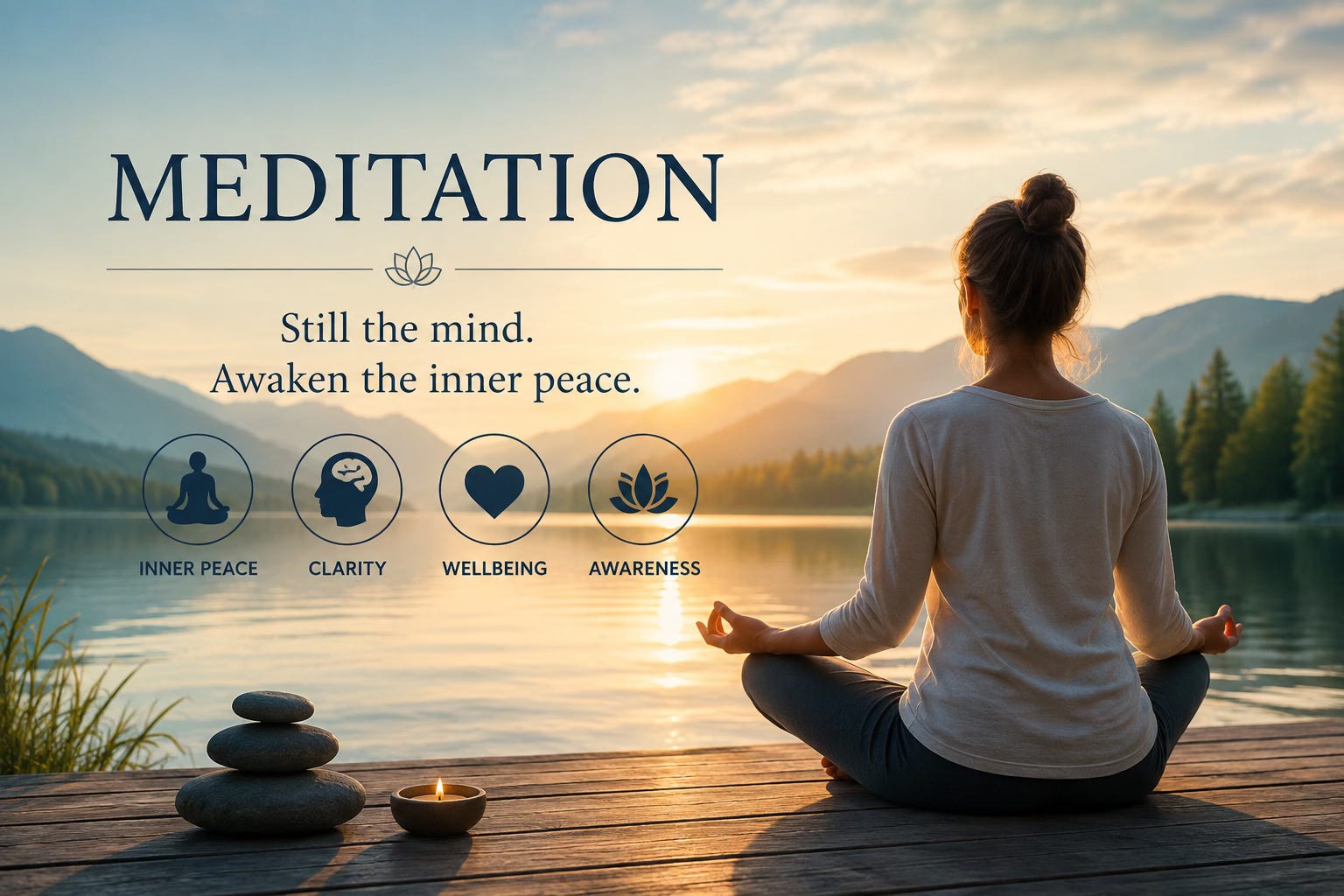
Meditation is a practice of turning our attention inward, allowing the normal activity of the mind to become quieter and creating an opportunity to experience greater stillness and awareness.
There are many different forms of meditation. Some use the breath, a mantra, visualisation, contemplation or focused attention, while others simply encourage us to become still and observe what arises. Although the methods vary, they share a common principle: temporarily withdrawing some of our attention from the constant activity of everyday life and becoming more aware of our inner experience.
Meditation does not necessarily mean trying to stop thoughts. Thoughts are a natural activity of the mind and attempting to suppress them can create further tension. Instead, we can learn to observe thoughts without continually following or becoming involved with them. With regular practice, periods of greater quietness may naturally develop.
What benefits can we expect?
The benefits of meditation can occur on several levels. Regular practice can encourage relaxation, reduce stress, improve concentration and help us become more aware of our thoughts, emotions and habitual reactions. This increased awareness can help us respond to situations more consciously rather than simply reacting automatically.
Meditation can also provide a valuable space away from the continual stimulation and demands of everyday life. Even a short period of stillness can provide an opportunity to regain perspective and develop a greater sense of balance and inner calm.
For those approaching meditation as part of a spiritual journey, the practice can go considerably deeper. As attention becomes less dominated by everyday thought, meditation can become a means of self-discovery and exploration of consciousness. Experiences vary greatly between individuals, but over time meditation may lead to a deeper understanding of ourselves and our relationship with the world around us.
The benefits are not necessarily immediate and meditation should not be approached with the expectation that a particular experience must occur. Like most worthwhile practices, its value tends to develop through regular experience.
Ultimately, meditation is something that is best experienced rather than simply understood intellectually. Reading can explain the principles and different approaches, but sitting quietly and practising allows each person to discover what meditation can offer for themselves.